
Introduction
Few questions create more tension between buyers and SEO agencies than this one:
“How long will SEO take?”
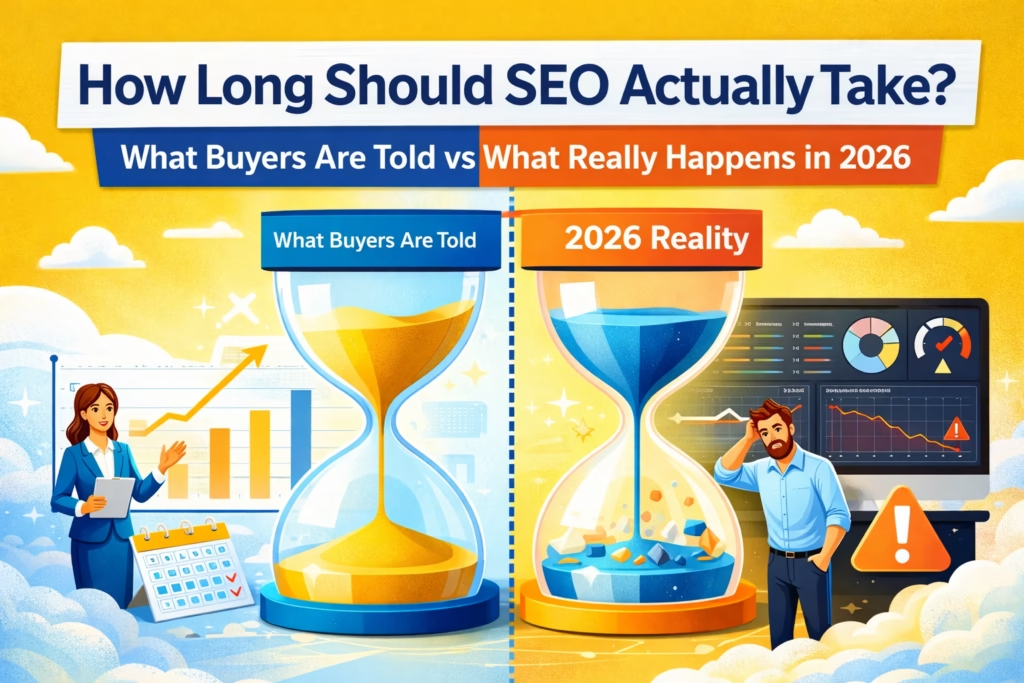
In 2026, this question is often answered badly either with vague timelines or unrealistic guarantees. Buyers are left waiting, doubting, and wondering whether progress is happening or excuses are being made.
This article is written from the buyer’s point of view. It explains how long SEO actually takes in 2026, why timelines vary so widely, and how experienced buyers judge progress before rankings fully materialize.
Why Buyers Ask This Question Earlier Than Before
SEO buyers today are not impatient they are risk-aware.
Most have already:
- spent money on SEO before
- waited months without clarity
- seen “promising early signs” that never converted
As a result, the timeline question is no longer about speed. It’s about confidence. Buyers want to know whether the strategy is moving in the right direction not just whether rankings will arrive someday.
This mindset shift explains why timeline-focused blogs are performing so well right now.
The Problem With Standard SEO Timelines
The classic answer “SEO takes 3–6 months” has become meaningless.
In 2026, SEO outcomes depend on:
- starting authority
- competition level
- link quality (not quantity)
- geographic focus
- alignment between content and links
Two sites can invest the same budget and see entirely different timelines. When agencies reuse generic timelines, buyers sense that strategy is not tailored and trust erodes.
What Real Progress Looks Like Before Rankings Arrive
Experienced buyers don’t wait for page-one rankings to judge success.
They look for:
- clearer movement on priority pages
- stabilization instead of volatility
- faster indexing and retention of new pages
- improved lead quality, even at low volume
These are early authority signals not vanity metrics.
This diagnostic approach is similar to how buyers assess underperforming campaigns in “We’re Spending on SEO but Nothing Is Improving”, where progress must be explained, not assumed.
Why Link Building Timelines Are Often Misunderstood
Link building is where timeline confusion peaks.
High-quality links do not produce instant movement. They compound slowly as Google re-evaluates trust. Cheap or automated links may move rankings faster but decay just as quickly.
This is why manual link building in 2026 tends to show slower initial movement but stronger long-term stability, while cheap strategies fail quietly, as explained in why cheap link building fails in 2026.
Buyers who understand this stop chasing speed and start watching signal quality.
Why Some Niches Take Longer (And That’s Not Failure)
SaaS, Tech, Crypto, and B2B services operate under higher trust thresholds.
Google requires more reinforcement before assigning stable rankings. This is why SaaS buyers often feel SEO is “slow,” even when it’s working correctly a challenge discussed in why SaaS companies struggle with link building in 2026.
Longer timelines are not always a warning sign. Unexplained timelines are.
How Buyers Should Judge SEO Timelines Properly
In 2026, the right question is not:
“How long until we rank?”
It is:
“What should improve next if the strategy is working?”
When agencies can answer that clearly and results align with expectations buyers remain confident even before major wins arrive.
Final Analysis
SEO timelines in 2026 are not predictable but they are diagnosable.
When progress is explained, aligned, and observable at the signal level, waiting feels reasonable. When it’s vague, even fast movement feels suspicious.
The difference is not speed.
It’s clarity.
If SEO feels slow but structured, it’s often working.
If it feels fast but unclear, it usually isn’t.
Knowing the difference is what protects buyers from wasted time and false hope.