
If you buy or sell backlinks and felt a flicker of dread hearing “Google spam update” this summer, here’s the direct answer: the June 2026 update which ran from June 24 to 26 was not aimed at link spam or site reputation abuse specifically. Google described it as a routine refinement of existing detection systems, its second spam update of the year. That’s worth knowing before anyone panics about a recent ranking dip and blames their backlinks by default.
But the more important story from this stretch of 2026 isn’t the spam update itself it’s how much Google’s actual results page has changed around it, and what that means for anyone doing SEO or link building right now.
What the spam update actually did (and didn’t do)
The update targeted broader policy-violating tactics generally, not a specific category like link spam. It was the second such update this year, following a March 2026 spam update that finished in under 24 hours this one ran a little longer, just over two days, and community trackers described it as somewhat more widespread in effect than the March update, without a specific named target.
What this means practically: if your rankings shifted after late June, it’s worth a genuine technical and content-quality review rather than assuming it’s about your backlink profile specifically this update wasn’t built around links.
The bigger story: Google’s results page keeps changing shape
While the spam update made headlines, the more consequential shift this month was structural. AI Overviews — the AI-generated summaries appearing directly in search results picked up a live news carousel, AI-generated images, and new citation display formats. At the same time, Search Console quietly added tools letting site owners see and influence how their content appears inside these AI features specifically, not just classic blue-link rankings.
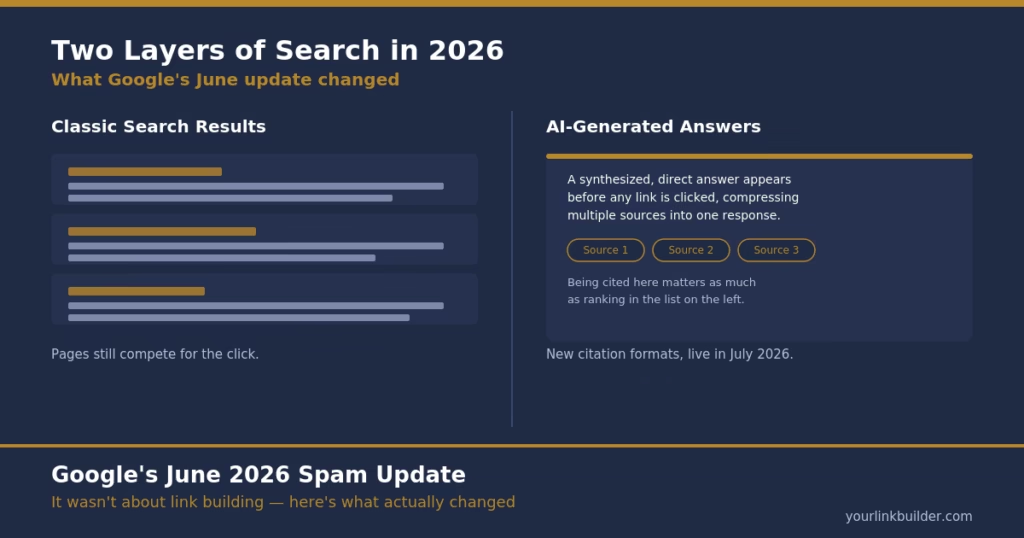
This matters because search has effectively split into two layers now: the classic results page, where pages still compete for clicks, and AI-generated answer environments, where systems synthesize, quote, and compress information sometimes without the user ever clicking through to a site at all.
What this means for link building and SEO buyers specifically
- Being cited matters as much as being clicked. With AI Overviews now showing richer citation displays, appearing as a trusted, cited source inside an AI answer is becoming a real, separate goal from ranking position not just a side effect of ranking well.
- Generic content is losing ground fast. AI systems can compress ten similar articles into a single answer. Pages that survive this compression are the ones with real proof, specific use cases, and a clear point of view not another generic “10 tips” list.
- Technical crawlability is now a prerequisite for two audiences, not one. If bots can’t crawl, render, and understand your site, you lose visibility in classic search AND in AI-generated answers the bar didn’t get lower for either.
- Trust signals now matter before the click happens. Brand mentions, reviews, and a real founder or expert identity carry more weight now, since a person may see your name inside an AI answer before ever visiting your site first impressions increasingly happen off your own domain.
What we’re actually doing differently because of this
This is exactly why our own recent content and page work has leaned into direct-answer openings, real data instead of generic claims, and named expertise rather than anonymous brand voice not as a trend to chase, but because it’s now functionally required to show up in either layer of search, not just one.
If you’re evaluating whether your own site or your current agency’s approach accounts for this shift, see how we structure link building and content work today, or check our current pricing to see what a modern, AI-aware approach actually costs.
Did Google’s June 2026 update target backlinks or link building?
No — Google explicitly described it as a routine spam detection refinement, not targeted at link spam or site reputation abuse specifically.
What’s new with AI Overviews as of mid-2026?
AI Overviews gained a live news carousel, AI-generated images, and new citation display formats, changing how sources are shown and credited inside AI-generated search answers.
Does Search Console now show AI Overview performance?
Yes — Search Console added new tools giving site owners visibility and some control over how their content appears specifically within AI-generated search features, separate from classic ranking reports.
If my rankings dropped after June 2026, is it because of my backlinks?
Not necessarily — since this specific update wasn’t targeted at links, a ranking change is worth investigating through a broader technical and content-quality lens rather than assuming a link penalty by default.